 raj_seo
Home Electrical Safety Checklist: Warning Signs You Should Never Ignore
Electrical systems are an essential part of every modern home, powering everything from lighting and kitchen appliances to heating, cooling, entertainment systems, and everyday electronic devices. However, electrical problems can develop gradually and often go unnoticed until they become serious. Faulty wiring, overloaded power points, damaged electrical outlets, and outdated switchboards can create significant safety risks, including electric shocks, electrical fires, and damage to household appliances.
Many homeowners assume that if their lights are working and their electrical appliances are operating normally, their home’s electrical system must be safe. Unfortunately, this is not always the case. Some electrical faults produce visible warning signs, while others develop behind walls, inside switchboards, or around electrical connections without obvious symptoms.
Following a regular home electrical safety checklist can help you identify potential problems before they become dangerous. Understanding which warning signs require immediate attention, knowing when to contact a licensed electrician, and taking preventive measures can help protect your family and property.
In this guide, we will explore the most important electrical safety checks every homeowner should know, common warning signs you should never ignore, and practical steps to maintain a safer electrical system.
Why Is Home Electrical Safety Important?
Home electrical safety is about more than keeping appliances operational. It involves ensuring that your electrical wiring, power outlets, switches, circuit breakers, and other electrical components are functioning correctly and meeting applicable safety requirements.
Electrical faults can occur for several reasons, including ageing wiring, poor installation, damaged cables, moisture exposure, overloaded circuits, and inadequate electrical maintenance. In some cases, problems develop slowly over several years. In others, a damaged connection or faulty appliance can create an immediate hazard.
Ignoring electrical problems can lead to serious consequences, such as:
- Electrical fires caused by overheating wires, faulty connections, or overloaded circuits.
- Electric shocks resulting from damaged insulation, faulty appliances, or exposed electrical components.
- Damage to expensive household appliances due to electrical faults and unstable power supply.
- Unexpected power interruptions caused by faulty circuits or damaged electrical equipment.
- Increased electricity consumption resulting from inefficient or malfunctioning electrical systems.
Regular inspections and timely electrical repairs help reduce these risks. Homeowners should also understand that electrical work in NSW must be performed by appropriately licensed professionals. Attempting to repair wiring, replace electrical components, or investigate internal switchboard faults without the required qualifications can put people and property at risk.
Home Electrical Safety Checklist: 12 Warning Signs You Should Never Ignore
A basic electrical safety inspection starts with recognising unusual changes in how your home’s electrical system operates. The following warning signs should never be overlooked.
1. Frequently Tripping Circuit Breakers
Circuit breakers are designed to protect electrical circuits by automatically disconnecting the power when they detect certain unsafe conditions, such as an overload or short circuit.
If a circuit breaker trips occasionally because too many appliances are operating on the same circuit, the system may be responding to an overload. However, frequent or unexplained tripping can indicate a more serious electrical problem.
Possible causes include faulty appliances, damaged wiring, short circuits, overloaded circuits, or defective electrical components. Repeatedly resetting a circuit breaker without identifying the underlying cause is not a safe solution.
What you should do: Pay attention to which appliances are operating when the breaker trips. Avoid repeatedly resetting it, and contact a licensed electrician to investigate the problem. If the switchboard is hot, smoking, sparking, or producing a burning smell, stay away and seek urgent assistance.
2. Flickering or Dimming Lights
Occasional light flickering can happen when an appliance starts, but repeated flickering or unexpected dimming should be investigated.
If lights flicker whenever you operate an air conditioner, microwave, washing machine, or another high-power appliance, it could indicate an overloaded circuit or an electrical connection problem.
Flickering lights in multiple rooms may also point towards a broader wiring or supply issue. Loose connections can generate heat and potentially increase the risk of electrical fires.
What you should do: Observe whether the flickering affects one light, one room, or the entire property. Do not attempt to access wiring or electrical fittings yourself. Arrange an inspection with a licensed electrician, particularly if the flickering is persistent or accompanied by buzzing, burning smells, or unusual heat.
3. Burning Smell Near Power Points or Switchboards
A burning plastic or rubber smell around an electrical outlet, switch, appliance, or switchboard is a serious warning sign.
This smell may indicate overheating insulation, damaged wiring, loose electrical connections, or an electrical component beginning to fail. In some situations, overheating can occur inside a wall or behind an electrical fitting before visible damage appears.
Never assume that the smell will disappear on its own.
What you should do: If it is safe to do so, switch off the affected appliance or isolate the affected circuit without approaching a hot, sparking, or damaged switchboard. Keep people away from the area and contact an emergency electrician. If you see smoke or fire, evacuate the property and call 000.
4. Warm or Discoloured Power Outlets
Power points should not become unusually hot during normal operation. If you notice a warm outlet, dark marks, brown discolouration, melted plastic, or scorch marks, there may be an electrical fault.
Common causes include loose connections, excessive electrical load, damaged internal components, or unsuitable extension lead arrangements.
Discolouration around an outlet is particularly concerning because it can indicate that heat has been building up over time.
What you should do: Stop using the affected outlet immediately. Do not touch damaged components or attempt to remove the power point cover. Have a licensed electrician inspect and repair the outlet before using it again.
5. Buzzing, Crackling, or Humming Electrical Sounds
Electrical switches, outlets, and switchboards should not produce persistent buzzing, crackling, sizzling, or popping sounds.
These noises can indicate loose connections, electrical arcing, damaged components, or faulty wiring. Electrical arcing occurs when electricity jumps across an unintended gap, potentially generating enough heat to ignite nearby materials.
Even if the electrical equipment appears to work normally, unusual sounds should never be ignored.
What you should do: Identify the general location of the noise without touching or opening electrical equipment. Stop using the affected outlet or appliance and arrange an inspection by a licensed electrician. If the sound is accompanied by smoke, sparks, or burning smells, treat it as an emergency.
6. Damaged or Exposed Electrical Wiring
Damaged electrical cables are one of the most obvious household electrical hazards. Wiring can deteriorate because of ageing, physical damage, pests, renovation work, or excessive heat.
Look for visible signs such as:
- Cracked or split cable insulation.
- Exposed copper or other internal conductors.
- Frayed appliance cords.
- Damaged plugs or connectors.
- Cables trapped beneath furniture or doors.
- Electrical cords showing signs of melting or overheating.
Exposed wiring can cause electric shocks, short circuits, and electrical fires.
What you should do: Keep children and pets away from damaged cables. Do not touch exposed conductors or attempt temporary repairs using tape. Stop using the affected equipment and contact a qualified electrician.
7. Electric Shocks or Tingling Sensations
Experiencing a tingling sensation or electric shock when touching an appliance, switch, tap-connected electrical equipment, or metal surface is never normal.
It may indicate damaged insulation, an earthing problem, faulty equipment, or another electrical safety issue.
Even a mild shock should be treated seriously. A small sensation does not necessarily mean that the fault is harmless.
What you should do: Stop using the affected appliance or equipment immediately. Do not touch it again to test whether the sensation continues. Keep others away and arrange an urgent inspection by a licensed electrician. If someone receives an electric shock, do not touch them while they remain in contact with the electrical source. Isolate the power only if it is safe, call 000 for serious incidents, and follow emergency first-aid instructions.
8. Frequently Blown Fuses or Failed Light Bulbs
If light bulbs fail repeatedly or fuses blow more often than expected, there may be an underlying electrical issue.
Common causes include incorrect bulb ratings, incompatible fittings, poor electrical connections, voltage problems, overheating, and faulty wiring.
Although replacing a light bulb is generally straightforward, repeatedly replacing failed bulbs without investigating the cause can allow an underlying fault to remain undetected.
What you should do: Check that replacement bulbs are suitable for the fitting and do not exceed its rated capacity. If bulbs continue to fail, flicker, or show signs of overheating, ask a licensed electrician to inspect the fitting and circuit.
9. Outdated or Damaged Electrical Switchboards
Your electrical switchboard is one of the most important safety components in your home. It distributes electricity to different circuits and contains protective devices designed to help prevent electrical hazards. Older switchboards may lack modern safety features or contain deteriorating components. Warning signs include damaged covers, corrosion, unusual noises, frequent circuit interruptions, visible scorching, and missing protective covers.
Homes with older electrical systems may also have outdated fuse arrangements that require professional assessment.
What you should do: Arrange a switchboard inspection with a licensed electrician. They can assess the condition of the existing equipment and determine whether repairs, upgrades, or additional safety switches are required.
10. Overloaded Power Points and Extension Leads
Using multiple high-powered appliances through one power point or extension board can increase the risk of overheating. This commonly happens in kitchens, home offices, entertainment areas, and bedrooms where several devices may be connected to a limited number of outlets.
Warning signs include warm extension boards, melting plugs, discoloured sockets, frequently tripping breakers, and extension leads connected to one another.
What you should do: Avoid connecting multiple extension leads together or exceeding their rated capacity. Distribute electrical loads appropriately and ask an electrician whether additional power points or dedicated circuits are needed.
11. Electrical Problems After Water Exposure
Water and electricity are a dangerous combination. Electrical outlets, switches, appliances, and wiring exposed to flooding, leaking pipes, roof leaks, or excessive moisture may become unsafe. Water can damage insulation, cause corrosion, and create conditions where electricity can travel through unintended conductive paths. An electrical fitting may appear dry on the outside while internal components remain damaged.
What you should do: Keep away from water-affected electrical equipment. Do not touch wet power points, switches, or appliances. If the electrical supply can be isolated safely from a dry location, do so. Otherwise, stay clear and contact emergency assistance and a licensed electrician. Electrical equipment exposed to flooding should be professionally assessed before being used again.
12. Appliances Operating Unusually or Overheating
Household appliances such as refrigerators, washing machines, ovens, dishwashers, and air conditioners can develop electrical faults over time. Warning signs include unusual humming, repeated shutdowns, overheating plugs, burning smells, unexpected power interruptions, and visible damage to electrical cords. Although some appliance problems are mechanical, unusual electrical behaviour can indicate a dangerous fault.
What you should do: Stop using appliances that show signs of electrical damage or overheating. Do not continue operating faulty equipment simply because it still works. Arrange an assessment by an appropriately qualified appliance technician or licensed electrician, depending on the problem.
Regular Home Electrical Safety Checklist for Every Homeowner
Recognising electrical warning signs is important, but prevention is equally valuable. A regular visual check can help you identify obvious problems before they become serious.
Use the following checklist as part of your household maintenance routine.
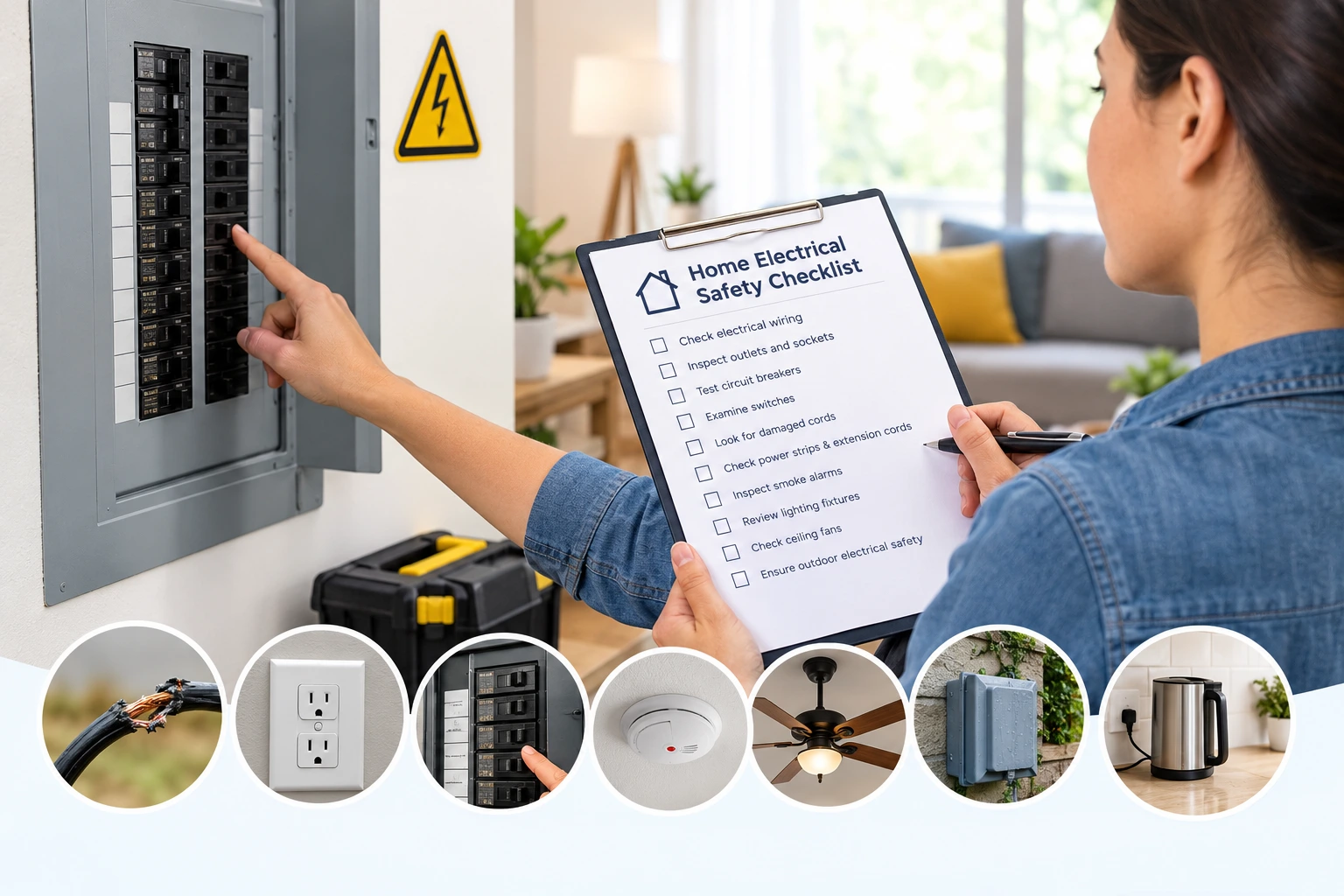
| Electrical safety check | What to look for |
|---|---|
| Power outlets | Cracks, loose fittings, scorch marks, or unusual heat |
| Light switches | Buzzing, sparking, damage, or unusual warmth |
| Electrical cables | Fraying, exposed wires, and damaged insulation |
| Extension leads | Overloading, damaged plugs, and excessive connections |
| Switchboard | Visible damage, corrosion, or unusual noises |
| Smoke alarms | Working condition and suitable placement |
| Appliances | Damaged cords, overheating, and unusual operation |
| Outdoor outlets | Weather damage, moisture, and damaged covers |
| Safety switches | Professional testing and correct operation |
| Electrical areas | Water leaks, moisture, and blocked access to switchboards |
Remember that this is a visual household checklist, not a substitute for professional electrical testing. Never remove switchboard covers, open electrical fittings, or touch internal wiring as part of a routine inspection.
Important Electrical Safety Precautions for Families
Electrical safety becomes particularly important in households with young children, older adults, and people who may not recognise electrical hazards. Parents should teach children never to insert objects into power points, play with electrical cords, or touch damaged electrical equipment. Keep electrical appliances and extension leads away from water sources, and use appropriate outlet safety measures where suitable.
In kitchens and bathrooms, pay particular attention to the placement and condition of electrical equipment. Never operate electrical appliances with wet hands or near water unless the equipment is specifically designed and installed for that environment. Homeowners should also avoid running electrical cables underneath carpets, rugs, or heavy furniture, as this can damage insulation and prevent heat from dissipating properly.
For outdoor areas, ensure electrical equipment is suitable for its environment and protected against moisture and weather exposure. Damaged outdoor lighting, garden power equipment, and exposed electrical connections should be assessed by a licensed professional.
When Should You Call a Licensed Electrician?
Not every electrical issue requires an emergency response, but certain warning signs should always receive prompt professional attention.
You should arrange an electrical inspection if you notice persistent flickering lights, frequently tripping circuit breakers, damaged power outlets, outdated switchboards, unusual electrical noises, or appliances repeatedly causing circuit interruptions. Some situations require immediate action rather than a routine appointment. These include smoke coming from electrical equipment, visible sparks, burning smells, exposed live wiring, electric shocks, and water entering electrical installations.
A licensed electrician can identify the source of the problem, assess the condition of electrical components, and recommend suitable repairs or upgrades. For residential properties in NSW, electrical work must be carried out by appropriately licensed electrical workers. Depending on the work performed, the electrician must also provide the relevant electrical safety documentation.
Professional electrical inspections may include checking wiring condition, switchboards, circuit protection, safety switches, earthing, power outlets, and other electrical installations. The purpose is not simply to identify existing faults but also to reduce the likelihood of future electrical problems.
How Often Should You Have Your Home’s Electrical System Inspected?
The appropriate inspection frequency depends on the age of the property, the condition of its electrical installation, previous maintenance, and how heavily the electrical system is used.
Older homes may require more frequent professional attention, particularly if their wiring, switchboard, or electrical fittings have not been assessed for many years.
You should also consider arranging an inspection when:
- Purchasing an older residential property.
- Renovating or extending your home.
- Installing high-powered appliances.
- Experiencing repeated electrical faults.
- Noticing signs of overheating or damaged wiring.
- Recovering from flooding or significant water damage.
- Adding new circuits or upgrading your switchboard.
There is no single inspection interval that is appropriate for every Australian home. A licensed electrician can recommend a suitable maintenance schedule based on your property’s specific electrical condition and applicable requirements.
Benefits of Professional Home Electrical Safety Inspections
Professional electrical inspections offer several important benefits for homeowners.
Improved household safety: Identifying damaged wiring, faulty connections, and defective protective devices can help reduce the risk of electric shocks and electrical fires.
Early fault detection: Electrical problems do not always produce obvious symptoms. Professional testing can identify certain issues before they become more serious.
Better appliance protection: Correctly functioning electrical circuits and protective devices help protect household equipment from electrical faults.
Improved electrical reliability: Addressing recurring electrical problems can reduce unexpected power interruptions and improve the reliability of your home’s electrical system.
Compliance with applicable requirements: Professional electricians can assess electrical installations against relevant Australian requirements and advise on necessary corrective work.
Investing in electrical maintenance is a practical way to protect your property, household members, and electrical equipment.
Frequently Asked Question
1. What are the most common warning signs of electrical problems at home?
Common warning signs include flickering lights, frequently tripping circuit breakers, burning smells, warm power outlets, buzzing switches, damaged electrical cords, and unexpected electric shocks. These symptoms may indicate faulty wiring, overloaded circuits, loose connections, or damaged electrical components.
2. How can I tell if my home’s electrical wiring is unsafe?
Visible signs such as exposed wires, cracked insulation, burning smells, discoloured outlets, and frequent electrical interruptions may indicate unsafe wiring. However, some faults develop inside walls and cannot be identified through a visual inspection. A licensed electrician can assess and test the electrical installation.
3. Are frequently tripping circuit breakers dangerous?
Frequently tripping circuit breakers should never be ignored. They may indicate overloaded circuits, faulty appliances, short circuits, or damaged wiring. Circuit breakers are designed to provide protection, so repeatedly resetting them without identifying the cause is not recommended.
4. How often should electrical safety inspections be carried out?
Inspection frequency depends on the property’s age, electrical condition, usage, and maintenance history. Older properties and homes experiencing repeated electrical faults may need more frequent assessments. A licensed electrician can recommend an appropriate inspection schedule.
5. Can overloaded power points cause electrical fires?
Yes. Overloaded outlets, extension leads, and electrical circuits can generate excessive heat, potentially damaging insulation and surrounding materials. Avoid connecting multiple high-powered appliances to one outlet and ensure electrical equipment operates within its rated capacity.
6. What should I do if a power outlet smells like burning plastic?
Stop using the outlet immediately and keep people away from it. If it is safe, isolate the affected circuit without touching damaged equipment. Contact a licensed electrician urgently. If you notice smoke or fire, evacuate the property and call 000.
7. Do older homes need electrical upgrades?
Older homes may benefit from electrical upgrades if their wiring, switchboards, outlets, or protective devices are outdated or deteriorating. However, the need for upgrades depends on the actual condition of the installation. A professional inspection can determine which improvements are necessary.
8. Why are safety switches important in Australian homes?
Safety switches, also known as residual current devices (RCDs), are designed to disconnect electricity quickly when they detect an imbalance in electrical current. This helps reduce the risk of electric shock. They provide an important layer of protection but do not eliminate every electrical hazard.
9. Can I check or repair electrical wiring myself?
Homeowners can perform basic visual checks, but electrical wiring repairs, switchboard work, and other regulated electrical work must be carried out by appropriately licensed professionals. Never attempt to open electrical fittings or repair exposed wiring yourself.
10. What should I do during an electrical emergency?
Keep everyone away from the affected area. Do not touch exposed wires, damaged appliances, or equipment in contact with water. Isolate the electricity only if it is safe to do so. If there is a fire, smoke, or immediate danger, evacuate and call 000. Arrange professional electrical assistance before using the affected equipment again.